Food and Beverage Operation

Have you ever attended a major event when there was no food or drinks available? It’s improbable! Food and beverage is frequently one of the most expensive (if not the most expensive) expenses for gatherings. At events, guests remember the food, especially if the occasion revolves around a meal.

The three people who were able to eat in the various restaurants are listed below.

1. Arl Chua

The first is that they target or research their clients’ profiles, particularly their food preferences, in order to provide or request suggestions and meals. Although each restaurant has its own promotion technique, as arl pointed out the key is the waiter’s ability to communicate with visitors.

2. Angel Baranggan

Servers routinely offer the more costly dishes on the menu in the restaurant where I dined, assuming that this will rapidly attract the customer’s attention. In addition, you’ll see on their menu that they show the product first, which can only be purchased separately; the price is a touch high, but if you look at the ingredients, you’ll see how. Upon learning my preferences, the server advised me on which of their top selling desserts was the best option for me, and when I asked him which page of the menu he had on hand, he talked me through it.

3. KL Burlat

I believe that “promotion” for a meal in excellent restaurants is done very quietly. I’m familiar with the way through which service employees may provide (daily) recommendations to customers: “Today, I can suggest this or that to you.” A specialty or seasonal menu card with exclusive or limited-time-only items is very popular and can persuade a guest to try something new. The method of displaying wax replicas of menus that is apparently common in Japan is scarcely known or done in Europe. The majority of advertising for a restaurant or a specific menu of that restaurant is reliant on so-called “word of mouth. It signifies that the restaurant or service personnel suggests to the customer an expensive product / dish that he has chosen, I believe! I can only assume that in the case of food or drink, this works primarily through the argument of “quality,” followed by freshness and taste, and potentially also through the technique of raw material manufacturing (keyword “sustainability”). For example, a restaurant might serve dishes made from ingredients grown in an environmentally friendly and healthy manner (without pesticides, free of genetic engineering, from organic farms) or from animals (meat and fish) raised using animal protection methods (free-range chickens, grazing cattle, no additives in animal feed), among other things.

It’s easy to see how any food service is part of the hospitality package if you understand the connection between event planning and hospitality. We mean anything from continental breakfast to formal plated dinners when we say food service.
Mealtime isn’t just a mealtime. It’s a chance to create relationships and bring people together to eat together. That budget line item suddenly doubles as a double-duty item!

Asia’s Best Dinning

If you’re a fan of Asian cuisines, or simply enjoy connecting with cultures through food, these Three(3) Asian food blogs are worth following.

1. Spiral Restaurant – Manila

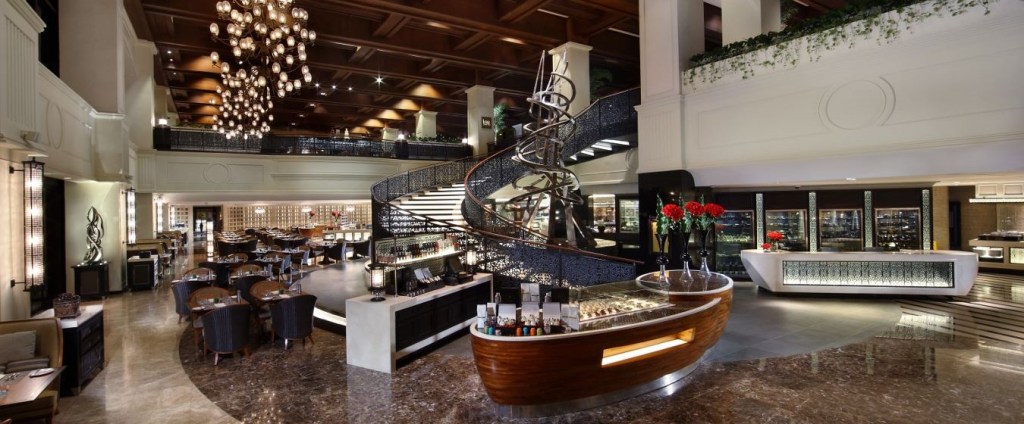
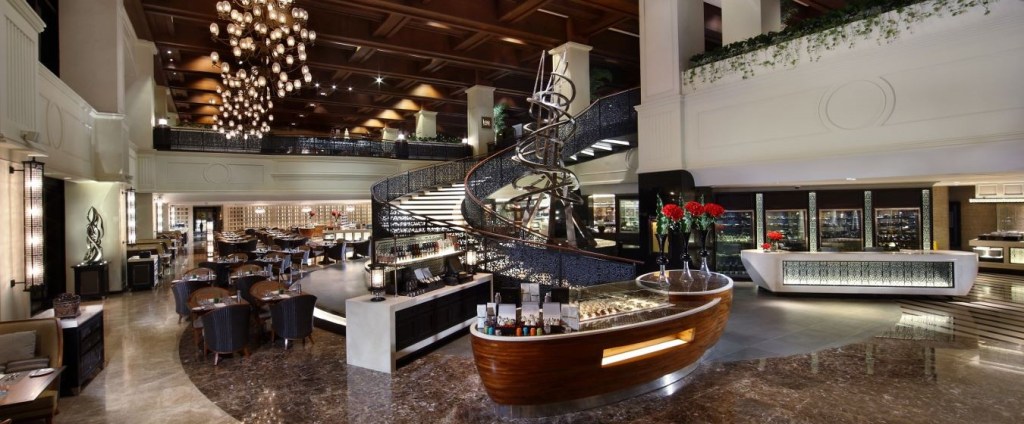
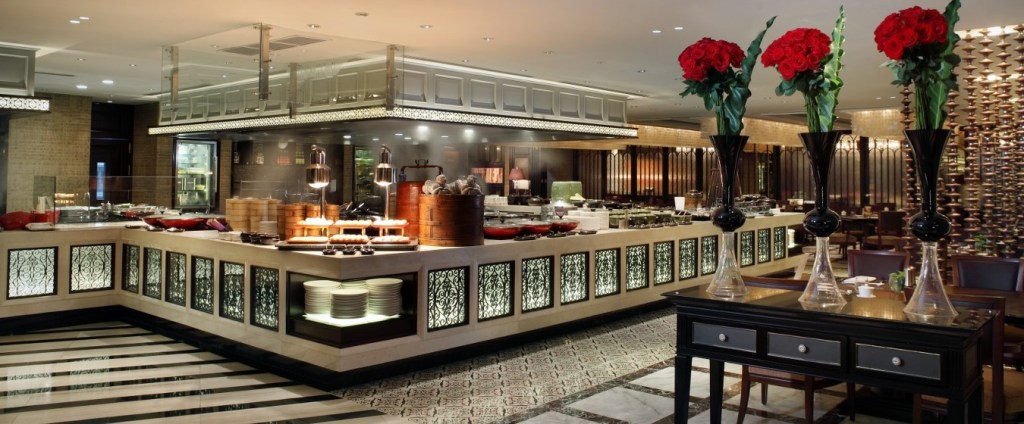
Spiral Restaurant, which is part of the Sofitel Philippine Plaza, has one of the country’s most well-known buffet presentations. The restaurant offers an interactive gourmet dining experience with 21 ateliers that allow you to sample cuisine from 21 different countries all in one location.

Breakfast, lunch, and dinner are all available as buffets. It’s worth splurging a few hundred pesos if you enjoy free-flowing champagne and wine. It’s worth noting that prices tend to rise during major holidays like Christmas and New Year’s Eve.

Spiral Restaurant serves a delectable selection of cuisine in a refined setting. A list of all the ateliers and what they provide, from the French station to the Japanese hot and cold stations, may be found at the front of the dining area. As soon as you sit down, a basket of fresh olive bread is placed in front of you, and it pairs perfectly with butter. Don’t overeat, though, since you’ll need room for the delectable steak, oysters, crabs, ramen, sushi, noodles, caviar, pasta, roasted chicken, wood-fired pizza, dim sum, and much more.

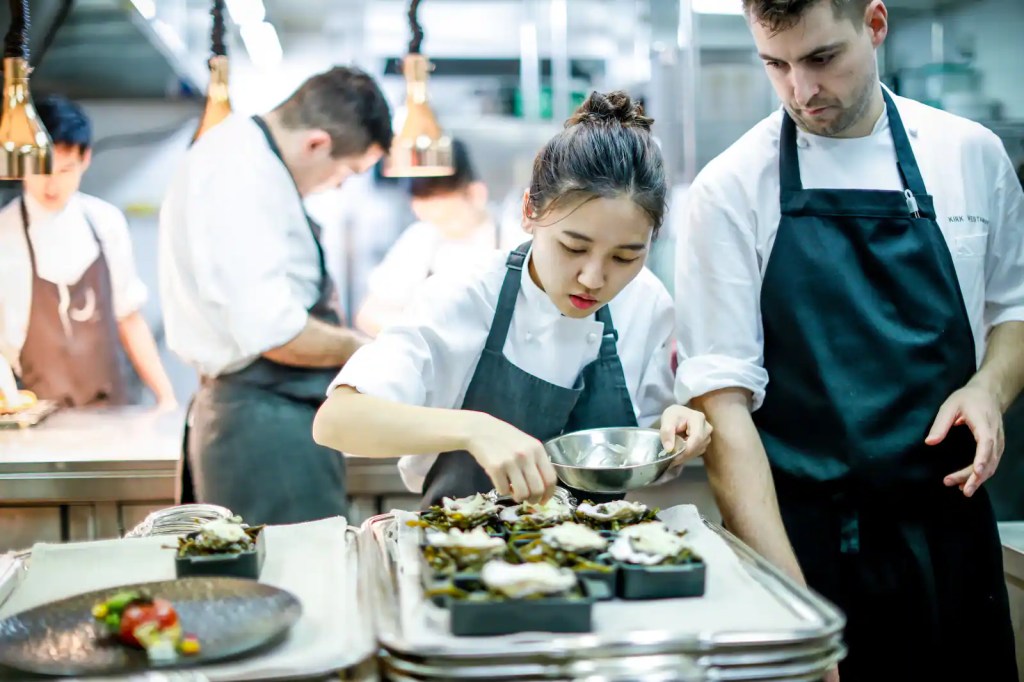
The cheese area is a clear standout for us, and it alone is worth the buffet’s price. Their Filipino station is certainly worth a visit. Where else in a fine-dining setting can you have balut (fertilized egg) and crocodile adobo? The open kitchen idea at Spiral Restaurant allows you to engage with the chefs and observe as your cuisine is made and cooked right in front of your eyes — an intriguing experience in and of itself

Embark on your own journey of taste. Experience the world at the tip of your tongue. Stir your senses and have a magnifique time at Spiral!

2. Jaan Restaurant in Singapore

Fine Dining at Swissotel the Stamford

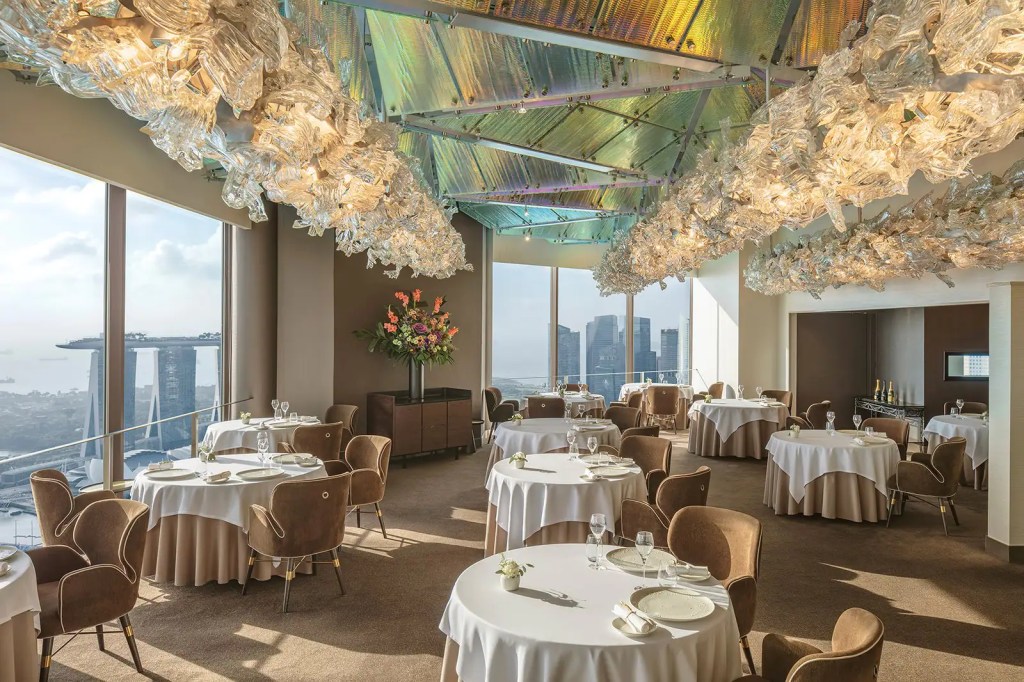
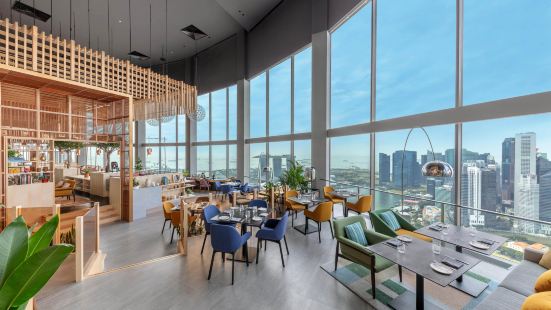
Since its inception on the 70th level of the Swissotel the Stamford hotel, Jaan Restaurant has been at the forefront of Singapore’s fine dining scene. Jaan’s wow-factor begins even before you take your first mouthful, with panoramic views of the Singapore skyline. And you’ll be equally as impressed when you do.

Jaan Restaurant in Singapore – one of the highlights of 9 Best Restaurants in the Civic District Singapore and 21 Best Restaurants at Marina Bay.

The tiny 40-seat restaurant offers a sophisticated French-inspired menu with several deviations, including Italian and Asian cuisine. When you glance up at the gleaming silver installation on the ceiling, the overall classic décor and soothing lighting are replaced with a more contemporary edge

3. La Yeon at The Shilla Seoul

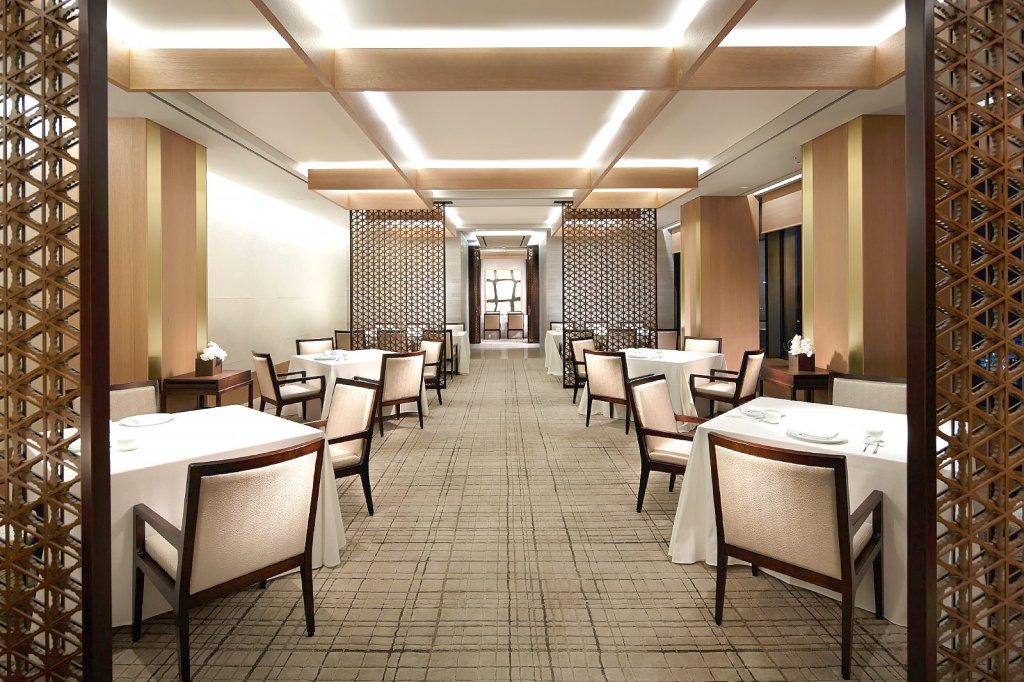
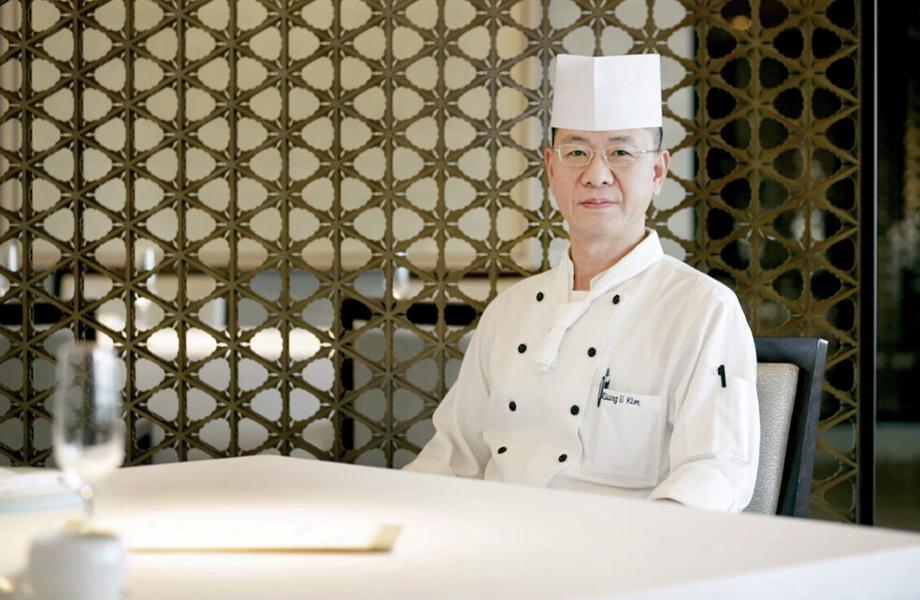
Traditional Korean cuisine are served in a fine-dining environment at La Yeon at The Shilla Seoul. Kim Sung Il, an award-winning chef, creates a comprehensive range of haute Korean cuisine using the best quality local and seasonal ingredients.

Award-winning chef, Kim Sung Il uses the highest quality local and seasonal ingredients to create an extensive range of haute Korean cuisine. Traditional Korean delicacies tend to be very spicy and pungent, but dishes at La Yeon Seoul showcase the ingredients’ subtle yet natural flavours, which suit international clientele.

Jaan Restaurant is easy to find – it’s in one of the tallest hotels in Singapore. Take the MRT to City Hall or tell your driver to head to Swissotel the Stamford, then take the elevator to the 70th floor. Reservations are necessary (especially for dinner) and there a dress code applies (no shorts or sandals).

“To see why they are the best location to be, don’t bother cooking — let those three best restaurants in Asia take care of everything for you. “